
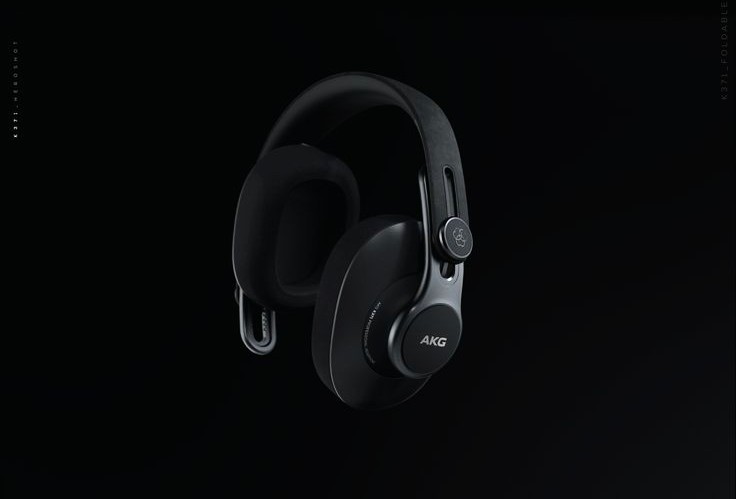
The AKG K371 has been around for a few years now, and while it was a breakout favorite among studio headphones when it launched, we’re in 2025. There’s no shortage of competition today—newer models, better materials, even planar magnetics in the same price range. So how does the K371 hold up? Is it still worth buying, or has it aged out of the conversation?
I decided to spend some real time with the K371s and dig into the nitty-gritty. Here’s how they stack up.

Unboxing and First Impressions
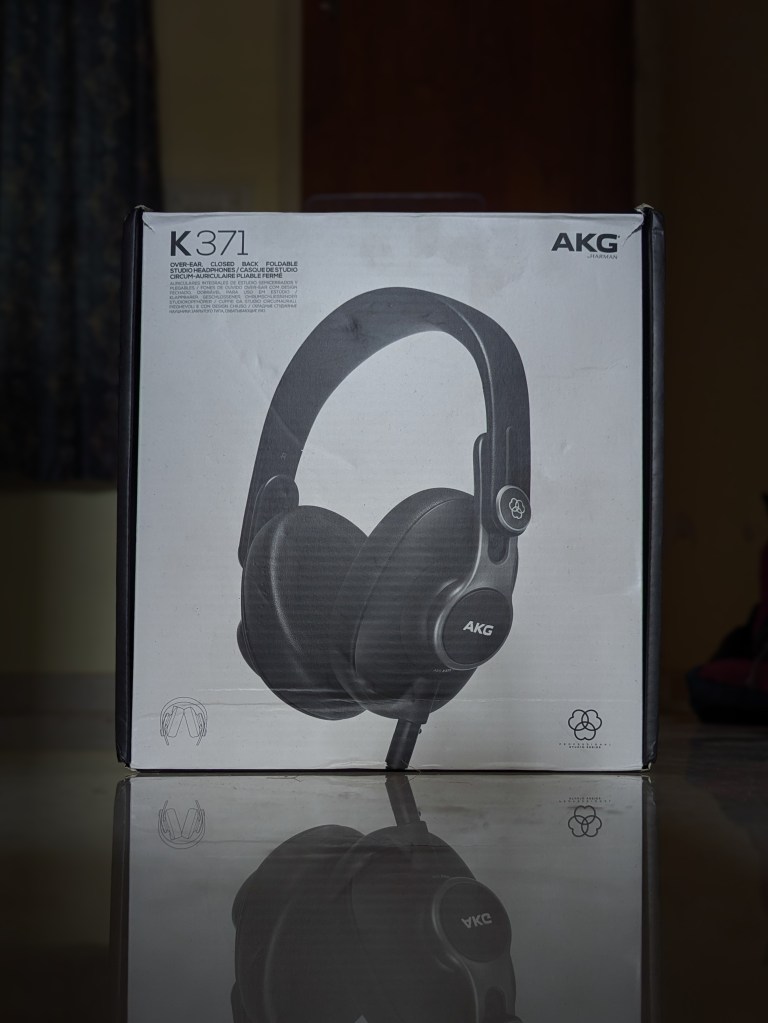
AKG keeps it simple and studio-first; even on the box.
Right out of the box, the AKG K371 gives off a low-key, professional vibe. There’s no flashy branding or over-designed aesthetic—just clean lines, a matte black finish, and a functional form factor. Inside the box, you’ll find:
- The headphones, obviously.
- Three detachable cables (a long straight one, a short straight one, and a coiled one).
- A soft carrying pouch.
- A 3.5 mm to 1/4″ adapter.
The cables are mini-XLR on the headphone end, which feels secure and professional—less likely to fray or come loose during use. That’s a nice touch.

Everything you get with the AKG K371
When you first pick them up, they feel lightweight but not cheap. The ear cups fold flat and the whole thing collapses inward for portability. If you’ve carried around bulky studio cans before, this design will feel like a blessing.
Build Quality & Comfort
Build:
The build is mostly plastic, but the headband has a metal reinforcement inside. It doesn’t scream luxury, but it’s practical and flexible. I’ve twisted and folded these more than I probably should have, and they’ve held up well. The hinge system is okay, and there’s just enough resistance to feel durable without being stiff.
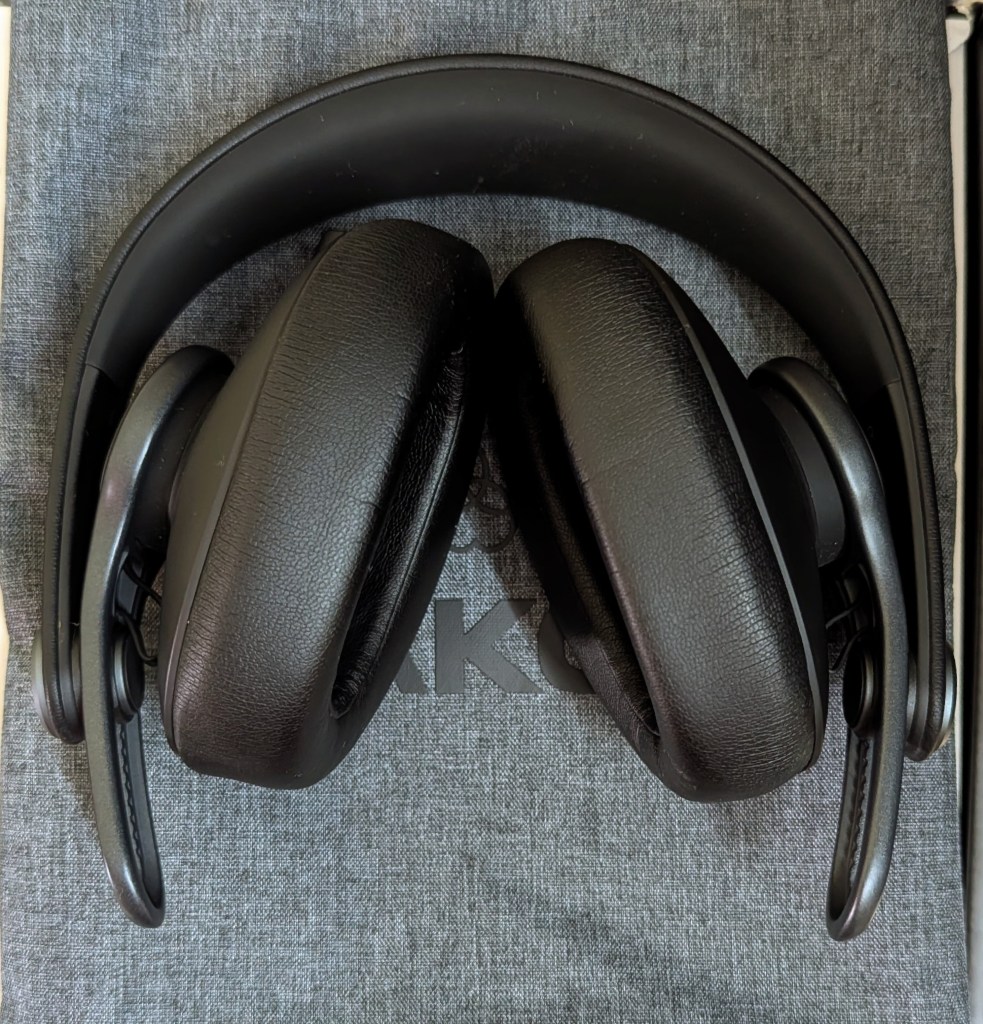
Folds up for travel: Surprisingly Compact
Comfort:
The ear-pads are made of memory foam with protein leather covering. They’re soft and seal nicely around your ears. I’ve worn them for long sessions— casual listening, and even teams meetings—and didn’t feel the urge to take them off. They’re over-ear, but on smaller heads, they might feel a bit large. The ear pads are plush and deep enough to cover the ears without pressing hard. Heat build-up is minor. The headband padding is just “okay” but nothing to complain about. Overall, it’s a comfortable fit for long sessions—but the synthetic leather may peel over time.
Long-term comfort: 👍
Long-term durability: 🤏 (watch the hinges)
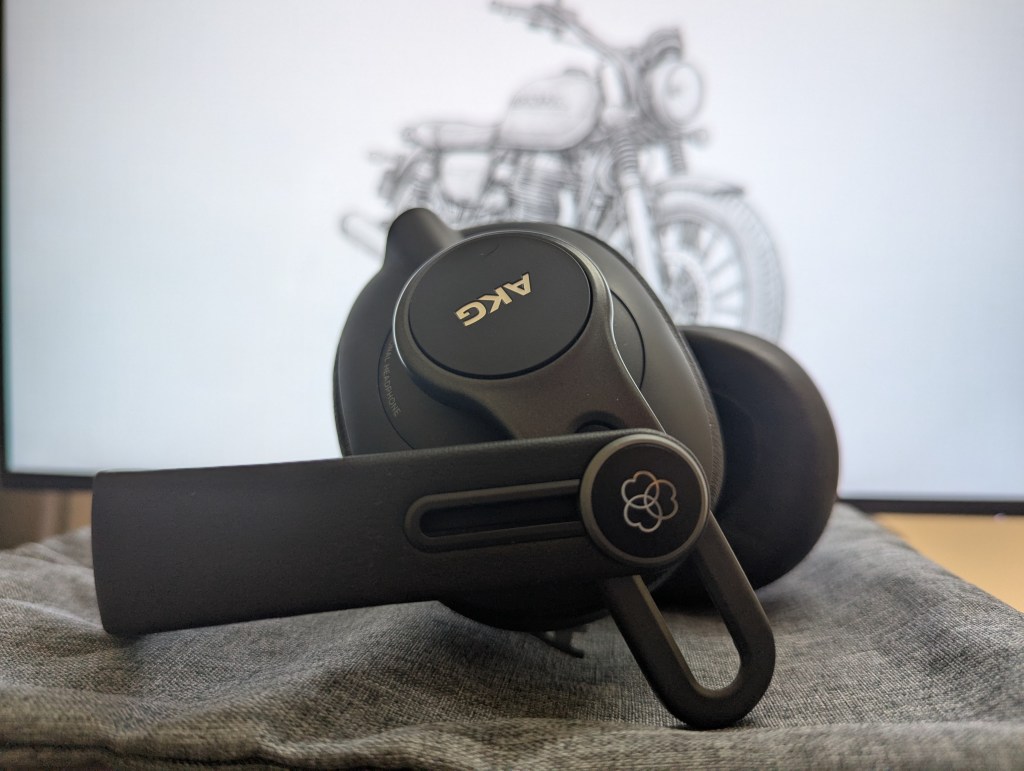
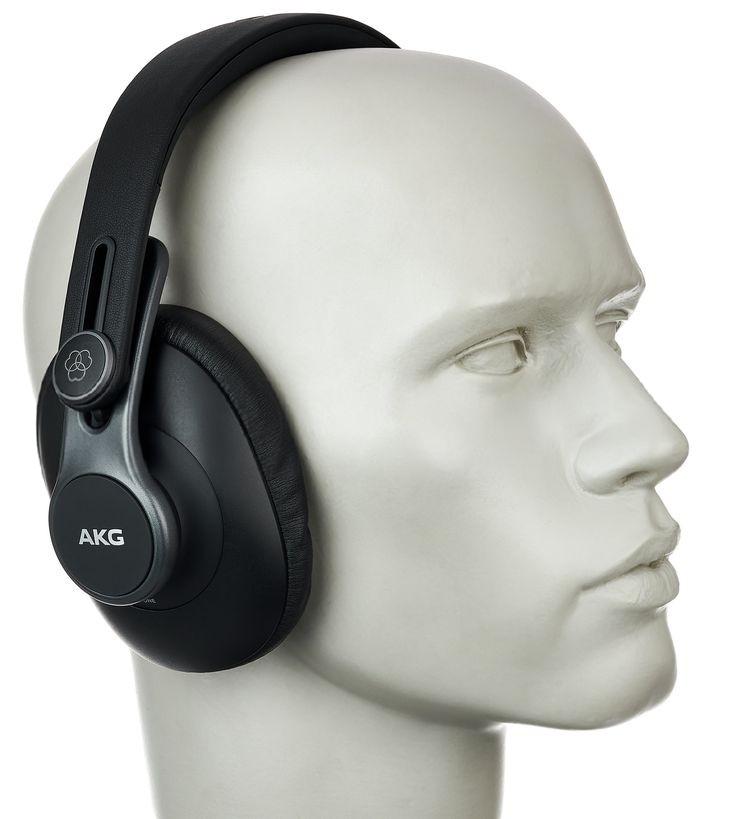
Designed for professional use, the K371 offers a discreet and comfortable fit
Sound Quality
Here’s the part that really matters. The AKG K371 isn’t just another “studio headphone” with flat tuning slapped on the box. AKG actually aimed to match the Harman target curve—a scientific average of how most people prefer headphones to sound. If you see a headphone tuned to the Harman Target, it means it’s designed to sound good to most people. It offers a nice balance of clear vocals. The bass is satisfying but not overpowering. The high notes are smooth. It’s like a scientifically backed “crowd-pleaser” for sound.
Let me break down the sound into three easy parts:
🎼 Bass (Low End)
The low-end is more emphasized than most studio headphones. This is a good thing for casual listening and modern music—hip-hop, pop, EDM all sound full and satisfying. But for mixing, the low-end can feel a bit too relaxed. If you’re trying to fine-tune kick/bass separation or sub-bass clarity in a dense mix, they’re not clinical enough.
This is not a bass-head headphone, but it won’t leave you cold either.
🎤 Mids (Vocals and Instruments)
Vocals and acoustic instruments sit right in the middle of the mix and sound natural here. No odd boxiness or nasal tones—just clean, precise mids. Whether it’s a podcast, a jazz track, or a rock ballad, everything sounds balanced and believable.
It’s also detailed enough to hear subtle things like vocal breaths or guitar finger slides, without being harsh.
🔔 Treble (Highs)
Here’s where things can get tricky. The highs are non-fatiguing—great for long listening sessions—but some detail is slightly rolled off, especially above 12 kHz. You might not notice it at first. However, if you perform A/B testing with something like a Sennheiser HD 600 or even the Moondrop Para, you’ll hear what’s missing. Subtle details like air in vocals or shimmer in cymbals are slightly dulled.
Imaging & Separation:
Respectable for closed-backs. You get a decent sense of space and left-right positioning, but don’t expect an open-back experience. Instrument separation is better than average, but it can get a bit congested in dense mixes.
The K371 offers a more neutral and less fatiguing sound compared to popular rivals like the Audio-Technica M50x. However, it trades away some of the M50x’s aggressive punch and “fun” factor. Compared to something like the Sennheiser HD 560S, the K371 lacks spaciousness. It also falls short on comfort. However, it excels in portability and bass fullness. If you’re after an all-rounder that leans slightly analytical but still has some musicality, this strikes a good middle ground.
The Technical Stuff
- Driver Size: 50 mm (bigger drivers = more bass control and loudness without distortion)
- Frequency Range: 5 Hz – 40,000 Hz
(This is wider than what human ears can hear. It just means the headphone is capable of high-resolution detail.) - Impedance: 32 ohms
(This tells you how much power they need. These are easy to power, so they’ll work well with your phone or laptop.) - Sensitivity: 114 dB
(Loud, even at low volume sources.)
TL;DR: You don’t need an expensive headphone amp. These sound great straight from a laptop or even a phone with a dongle.

Seamless integration with Mobile Devices
What’s Not Great
Let’s get real for a second. These headphones have their share of drawbacks:
- Build quality over time is questionable. Cracking hinges are a known issue, though it has been addressed by AKG later (thumbs up for that)
- Treble tuning is safe, maybe too safe. Airy details are a little muted.
- No hard case. The soft pouch doesn’t protect well during travel.
- Ear pads wear out fast. Replacement pads are hard to find and expensive.
If you’re buying this expecting tank-like durability or ultra-revealing detail, you’re going to feel a bit underwhelmed.
So… How Do They Hold Up in 2025?
In 2025, the headphone world is way more competitive than it was when the K371 first launched. Brands like Moondrop, SIVGA, and even budget planar options from Beyerdynamic and Hifiman are now available in the same price range or cheaper.
That said, the K371 still holds up surprisingly well in its lane:
- For portable studio work, it’s hard to beat the foldability and tonal balance.
- For home listening, it’s still enjoyable and smooth, especially for modern genres.
- But for critical mixing or audiophile-level clarity, it’s starting to lag behind newer options.
They’re like the Honda Civic of headphones—reliable, no-frills, and not flashy—but they don’t quite compete with the Tesla-tier innovation that’s crept into the budget audio space.
Who Should Still Consider These?
✅ Great for:
- Beginner producers or editors who want accuracy without harshness
- Music lovers who prefer smooth, warm, fatigue-free listening
- Commuters or creators who need foldable, closed-back headphones
- People who want a balanced sound that works across genres
❌ Probably not ideal for:
- People who mix/master professionally and need ultra-flat detail
- Bassheads who want head-rattling low-end
- Audiophiles chasing micro-detail and sparkle
- Anyone who tosses their gear around—the build won’t survive abuse
Final Thoughts
Using the AKG K371 over the past few weeks has been a bit like switching from fast food to clean, home-cooked meals. At first, the absence of overly spiced-up sound might leave you underwhelmed. But the more you listen, especially to well-recorded material, the more you start to appreciate what it’s doing—and just as importantly, what it’s not doing. There’s a quiet confidence to its tuning, like someone who knows their value and doesn’t feel the need to shout.
The AKG K371 walks a tightrope between studio precision and casual listenability—and, for the most part, it pulls it off. The sound signature is surprisingly refined for the price: clean mids, slightly emphasized (but controlled) bass, and treble that avoids harshness. It’s one of the rare headphones under ₹10000 that gets close to a reference-style tuning without feeling sterile.
Versatility is its strong suit. Whether you’re mixing podcasts, editing YouTube audio, or just binge-watching a series, the K371 adapts without demanding a dedicated amp. Still, if you’re used to a richer, more colored sound—like what you get from consumer brands like Sony or Beats—you might find the K371 a bit too flat or clinical.
For creators on a budget, casual home producers, or anyone curious about more honest sound without diving deep into audiophile territory, the K371 still makes sense in 2025. It won’t flatter every track, but it won’t lie to you either.

 Plugs n Jacks
Leave a comment